“Šimon Poklop”
Kanálový šklebič
Lithoprosopon brunense
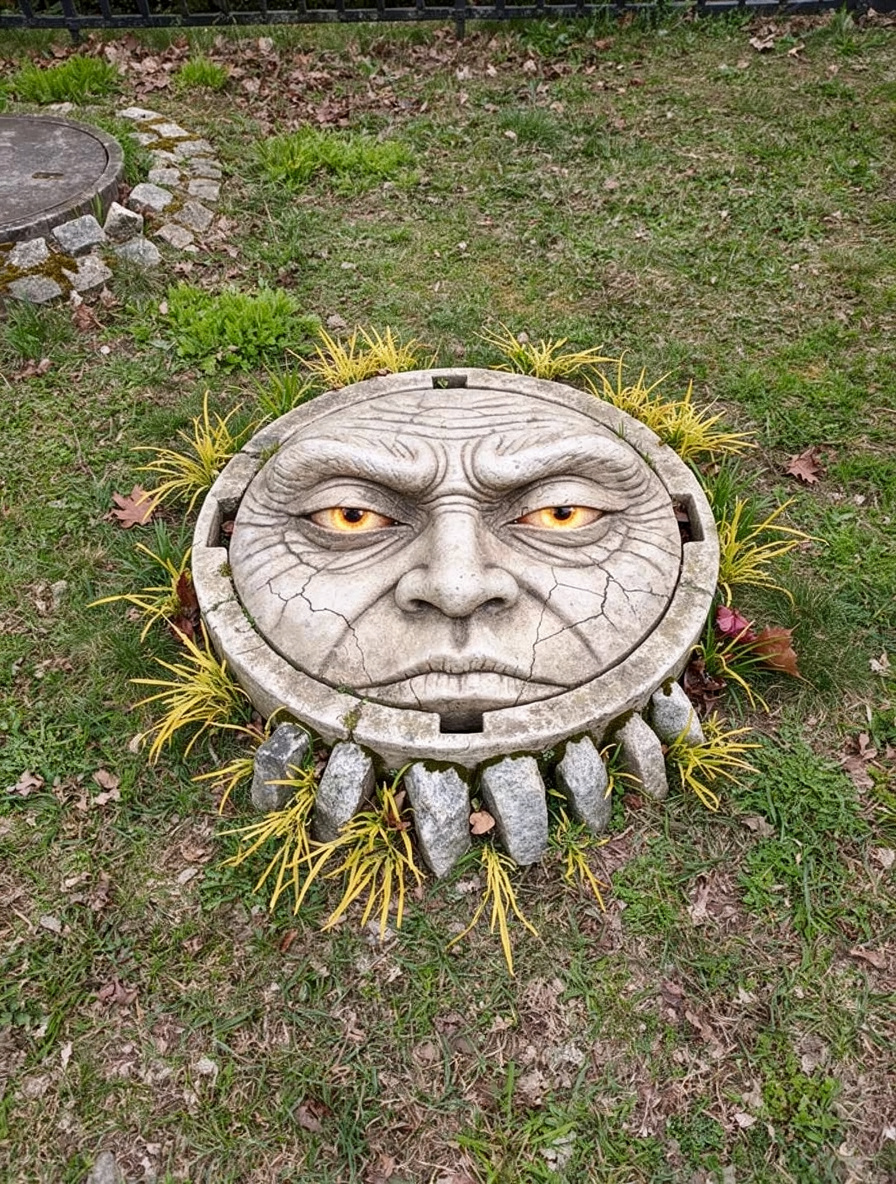
An uncommon lithic mimic cryptid endemic to the utility infrastructure of Moravian cities, the Kanálový šklebič (Sewer Grinner) is a slow-growing organism that colonizes manhole covers and surrounding stonework, gradually reshaping them into crude facial features over decades. Mature specimens measure 80–120 cm in diameter and weigh approximately 90 kg. The creature's body is composed of a bioite matrix — a living mineral tissue that secretes calcium carbonate and silicate compounds, allowing it to bond seamlessly with concrete and granite. Its two rectangular "eye" apertures are actually chemosensory organs that detect vibrations, moisture gradients, and the electromagnetic signatures of passing pedestrians. The cobblestone ring surrounding its central disc functions as a radial jaw structure capable of extremely slow mastication (one full bite cycle takes approximately 14 hours), feeding primarily on organic detritus — fallen leaves, moss, and insect matter that accumulates in its gingival crevices. The bright spots occasionally visible on its surface are bioluminescent calcium deposits that serve as lures for ground-dwelling invertebrates. The species exhibits remarkable patience; specimens have been documented remaining motionless for months before consuming a single meal. Its primary weakness is prolonged frost, which causes micro-fractures in its bioite tissue, explaining why specimens are most active during the transitional seasons of early spring and late autumn when temperatures hover around 5–10°C — precisely the current conditions. Czech urban legend holds that stepping on a šklebič's "eyes" brings seven years of plumbing misfortune, a superstition that may have originated from the creature's defensive response: when threatened, it releases a sulfurous gas from its lifting slots indistinguishable from sewer fumes. Scientifically, this gas is produced by anaerobic chemosynthesis within its bioite matrix, a metabolic pathway previously unknown in lithic organisms. Population estimates suggest 200–400 individuals across Brno's sewer network, with the Nový Lískovec district hosting a particularly dense cluster due to its combination of older infrastructure and abundant green space providing organic nutrient runoff.
Discovery Details
🎮 Play CryptoCam Early Access!
CryptoCam is now available in Early Access on Google Play. Jump in and start your cryptid research adventure!
🔍 What is Early Access?
Early Access means you're playing CryptoCam while we're still actively developing it. Expect new features, improvements, and occasional bugs. Your feedback directly shapes the game's future!