“Bahník”
Blatňák
Limnoserpes limnoserpes moravicus
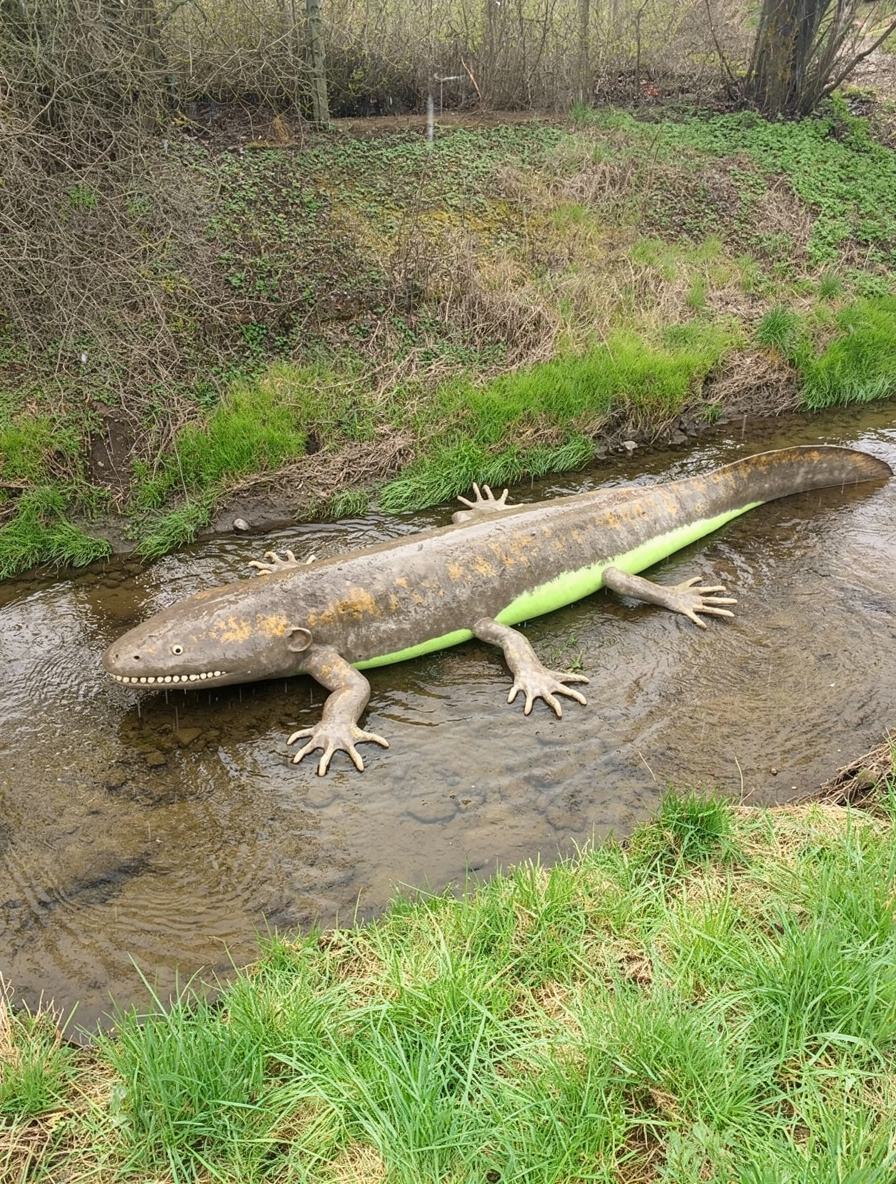
Rarity: Uncommon. The Blatňák is a cryptic amphibian endemic to the shallow urban streams of the Moravian lowlands, particularly the Leskava and its tributaries around Brno. Adults measure 35–50 cm in length, with a flattened, eel-like body perfectly adapted to navigating the silty, shallow waterways of suburban Moravia. Its dorsal surface is covered in a unique integument resembling wet river mud — a mottled pattern of grey-brown and ochre that shifts subtly depending on the mineral content of the surrounding sediment, achieved through specialized chromatophores that sample dissolved ions through the skin. This is not true camouflage but rather a form of passive chemical mimicry; the creature literally absorbs and displays the color of its habitat's mud. Its ventral side is a vivid, startling chartreuse green — the exact shade of fresh spring grass — which it flashes when threatened by rolling onto its back, confusing predators who momentarily perceive it as a strip of riverbank vegetation. The Blatňák possesses six vestigial limbs, each ending in three fused digits with adhesive pads used to anchor itself against stream currents. Its head is broad and spade-shaped, with two rows of electroreceptive pits along the jaw that detect the bioelectric fields of earthworms washed into the stream by rain — its primary food source. It is most active during light rain at temperatures between 4–10°C, making late March its peak season. The species exhibits a peculiar behavior: when the stream's water level drops below 5 cm, it buries itself in the bank mud and enters a torpor state, breathing through its skin, sometimes for months. Locals along the Leskava have long reported seeing the mud itself "breathe" on warm days — slow, rhythmic undulations in the creek bank that defy explanation. This is simply a colony of torpid Blatňáks respiring in unison. Its weakness is drought; prolonged dry spells can desiccate buried individuals. Its strength is near-perfect concealment — even experienced naturalists have walked directly over active specimens without noticing. The species likely diverged from ancestral giant salamanders during the Miocene, adapting to increasingly urbanized waterways over millennia.
Discovery Details
🎮 Play CryptoCam Early Access!
CryptoCam is now available in Early Access on Google Play. Jump in and start your cryptid research adventure!
🔍 What is Early Access?
Early Access means you're playing CryptoCam while we're still actively developing it. Expect new features, improvements, and occasional bugs. Your feedback directly shapes the game's future!