“Klíček”
Tůňák
Limnophasma limnophasma moravicum
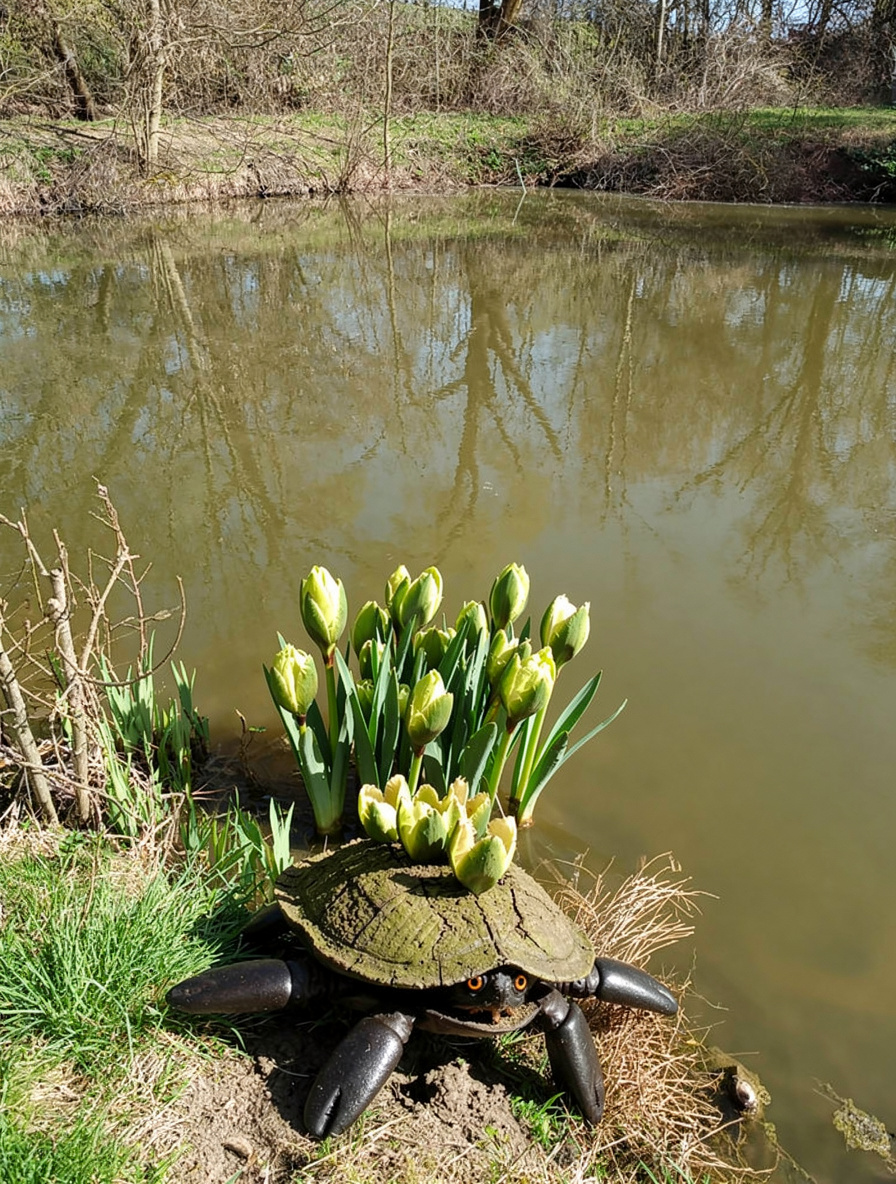
Rarity: Uncommon. The Tůňák is a semi-aquatic crustacean-like cryptid endemic to the slow, murky ponds and oxbow pools of the Moravian lowlands, particularly concentrated in the Vyškov district. Adults measure 35–50 cm in body length, with a broad, flattened carapace resembling waterlogged bark — mottled olive-brown with patches of bright chartreuse that mimic emerging spring vegetation. Six articulated limbs end in paddle-shaped appendages fringed with fine setae, used for both locomotion across soft mud and slow sculling through turbid water. Its most distinctive feature is a crown of 8–12 fleshy, leaf-shaped dorsal projections along the carapace ridge, which in early spring unfurl and stand erect, perfectly imitating the shoots of yellow flag iris (Iris pseudacorus). This remarkable mimicry allows the creature to bask at the water's edge in plain sight, indistinguishable from the emerging plant growth around it. The Tůňák feeds on detritus, aquatic invertebrates, and the rhizomes of pond-edge plants, using specialized chelicerae hidden beneath a ventral flap. When disturbed, it rapidly submerges, expelling a cloud of fine silt from specialized gill chambers — a behavior locals describe as the pond "breathing." Its olive-tinted hemolymph contains high concentrations of biliverdin analogues, giving its tissues a greenish hue that contributes to its camouflage. Moravian folklore holds that ponds harboring Tůňáky never fully freeze in winter, as the creatures generate metabolic heat through a unique anaerobic fermentation process in their hepatopancreas, raising the surrounding water temperature by 1–2°C. Weaknesses include sensitivity to water clarity — in clear streams, their camouflage fails entirely, restricting them to turbid, nutrient-rich waters. They are also slow on land, making them vulnerable during the brief spring dispersal period when they migrate between ponds. The species is solitary and territorial, with individuals defending a 5–10 meter stretch of shoreline. Breeding occurs in late March, with females depositing gelatinous egg masses among real iris rhizomes, further blurring the line between organism and plant.
Discovery Details
🎮 Play CryptoCam Early Access!
CryptoCam is now available in Early Access on Google Play. Jump in and start your cryptid research adventure!
🔍 What is Early Access?
Early Access means you're playing CryptoCam while we're still actively developing it. Expect new features, improvements, and occasional bugs. Your feedback directly shapes the game's future!