Pavla
verified researcher48.963, 16.757 • 5/10/2026 • 10:55 AM
New cryptid species documentedBílý travní švitořil
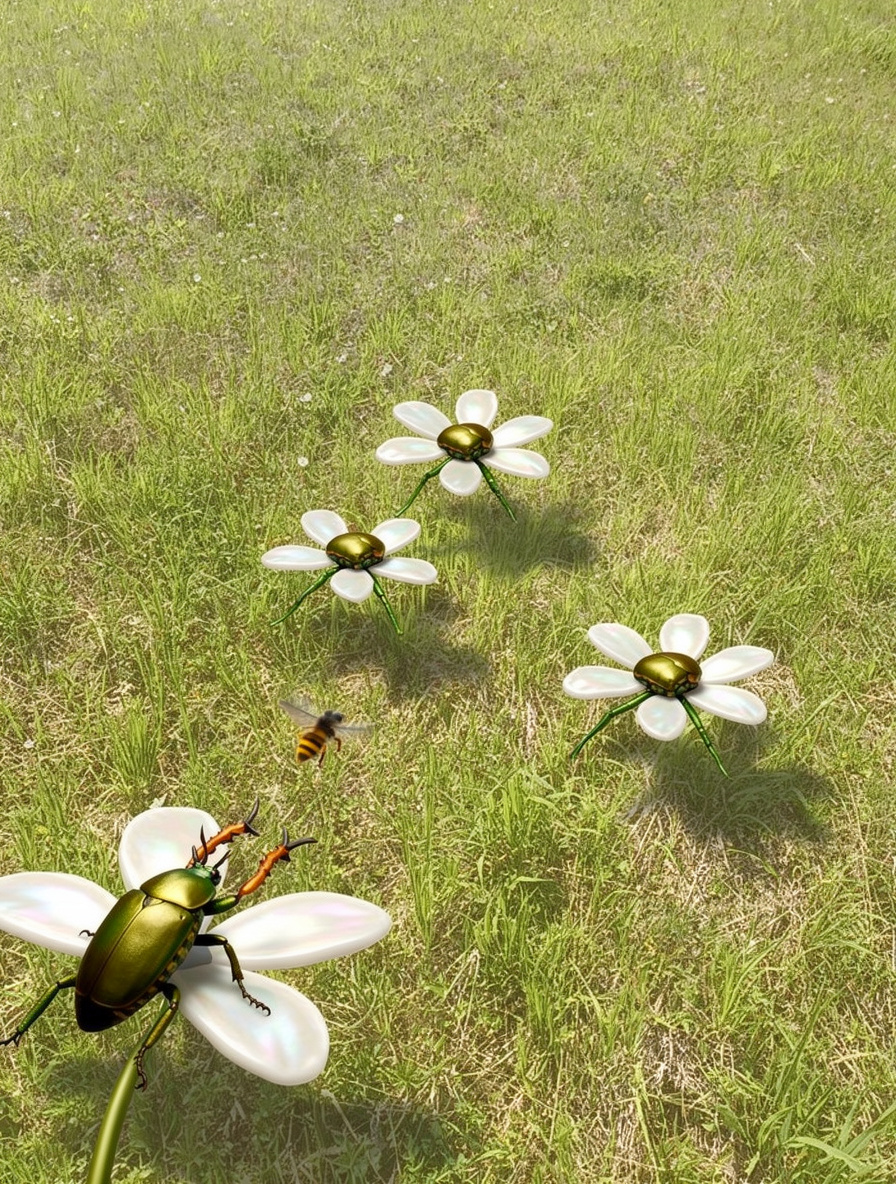
Rarity: Uncommon. Petalomimus kurdejovensis is a small (3–5 cm body length) cryptid insect endemic to the limestone steppe grasslands of southern Moravia, particularly the protected karst meadows around Kurdějov and Pálava. At first glance, it is virtually indistinguishable from the white wildflowers dotting the meadow — and that is precisely the point. This creature has evolved what researchers term "floral perfect mimicry," developing six petal-like chitinous plates radiating from its thorax that replicate the exact hue, texture, and UV reflectance pattern of local Stellaria and Cerastium blossoms. When stationary, it presses flat against the grass, spreading its petal-plates to form a convincing flower head roughly 2 cm across. Its abdomen secretes a faint nectar-like compound (a mixture of simple sugars and volatile terpenes) that attracts pollinating insects, which it captures with a lightning-fast strike from its modified forelegs — essentially, it is a flower that eats the bees that visit it. The creature's legs are elongated and grass-green, segmented to mimic grass stems, allowing it to "walk" between positions while appearing to be nothing more than swaying vegetation. When dozens congregate in a meadow, they create what locals call a "false bloom" — a patch of flowers that seems to shift position between visits. Kurdějov shepherds have long noted that certain flower patches seem to "wander" across the hillside over the course of a day, a phenomenon now attributed to colonies of P. kurdejovensis repositioning to follow insect flight paths. The species is diurnal and most active in warm, partly cloudy conditions when pollinators are abundant but direct sunlight is intermittent, allowing the cryptid to reposition without casting conspicuous moving shadows. Its primary weakness is strong wind above 5 m/s, which disrupts its petal display and exposes its insectoid body. It overwinters as a larva buried in the limestone scree. The false nectar it produces contains mild paralytic alkaloids derived from the calcium-rich soil microbiome, an adaptation unique among known arthropods, likely enabled by horizontal gene transfer from symbiotic soil bacteria in the Moravian karst substrate.